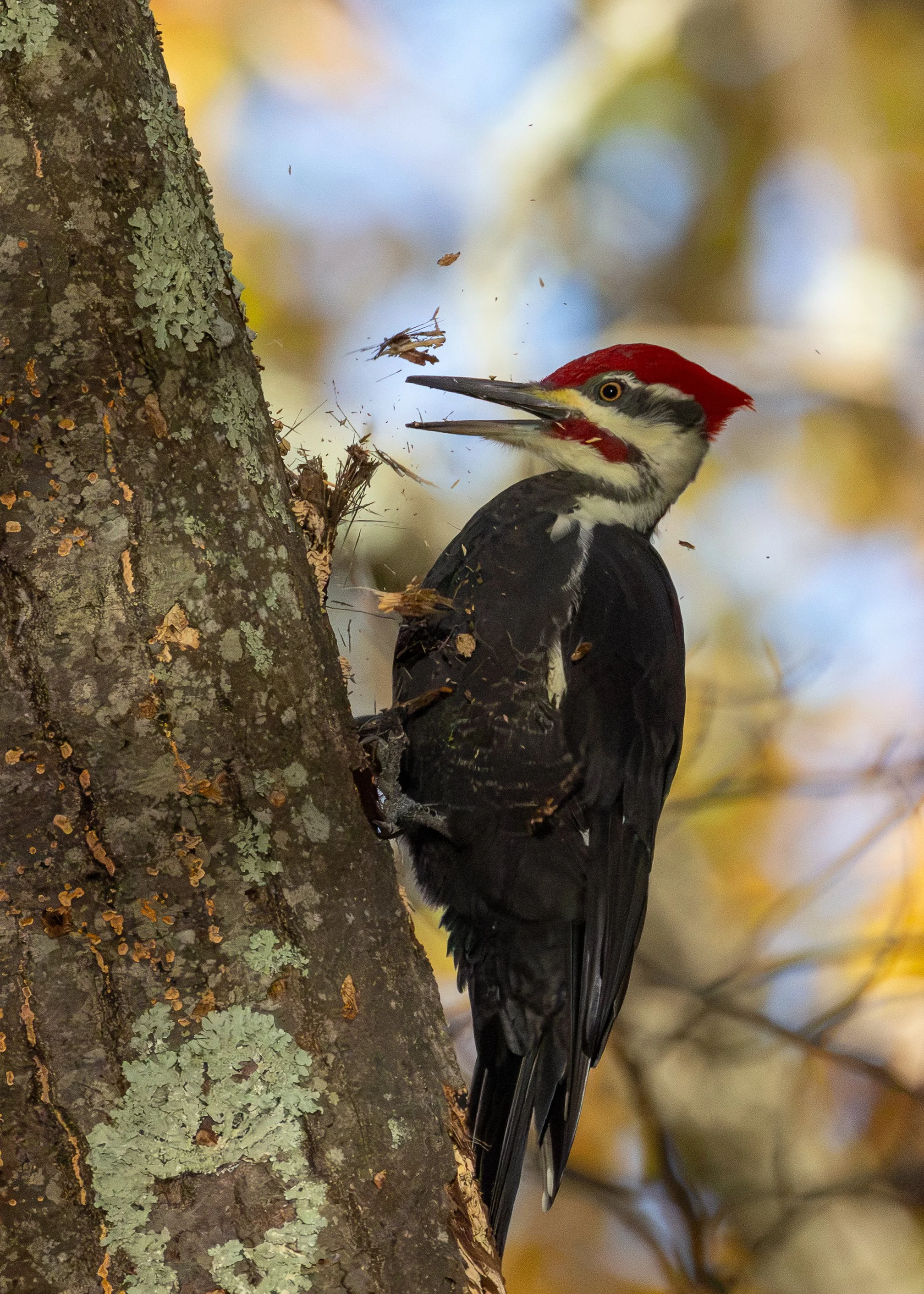
Pileated Woodpecker at Noanet Pond
Most days a Pileated Woodpecker is a solitary find: one loud call across the woods, one big black bird rowing away through the trees. On October 24 I found four moving through the forest together at Noanet Pond, all of them active and noisy.
The reason for the noise was a roosting Red-tailed Hawk. The four went after it together and kept at it until the hawk gave up and left. I have watched crows, jays and blackbirds mob a hawk many times. This was the first time I have seen Pileateds do it.
With the hawk gone they went back to feeding. This male worked the trunk hard enough to throw bark and wood chips past his own head, digging for the carpenter ants that make up much of a Pileated’s diet. I love the mischievous look in his eye as he sprays wood chips, as if he knows exactly how much of a mess he is making. The red crest and the red stripe behind the bill mark him as a male; on a female that stripe is black.
I’ve seen birds travel in groups like this before in late fall, and not only Pileateds. Once nesting is over, the woods loosen up. Birds that spent the spring defending a territory from their own kind stop bothering, and food and safety become the things that matter. Young of the year are still traveling with their parents or just starting to wander. Recently I’ve counted 17 Eastern Bluebirds in one group and 12 Cedar Waxwings in another. More eyes find more food, and four woodpeckers can move a hawk that one might leave alone.
For Pileateds, a pair holds its territory all year and the young usually drift off on their own in the fall. So my guess is that these four were a family that hadn’t split up yet, traveling together a little longer before winter.