Appreciating the everyday birds of Hale Reservation
There is a tendency in birding to place special emphasis on the unusual. We get excited about a rare visitor, an unexpected migrant, or a species that appears only briefly during the changing seasons. There is certainly a thrill in those discoveries. But I sometimes think we overlook something equally rewarding: the opportunity to appreciate the birds that are part of our everyday landscape.
At Hale Reservation in Westwood, we are fortunate to have a wonderful variety of birds that can be encountered throughout the year. Some have become such familiar companions that we can almost take their presence for granted. Yet spending a little time observing them reveals just how interesting and distinctive each one can be.
Consider the Belted Kingfisher. Its loud, rattling call is often heard before the bird itself comes into view. Along the ponds and waterways at Hale, these birds are a familiar presence, frequently seen perched on an overhanging branch, patiently surveying the water below. Suddenly, one will launch itself into the air, sometimes hovering briefly before plunging headfirst into the pond in pursuit of a fish.
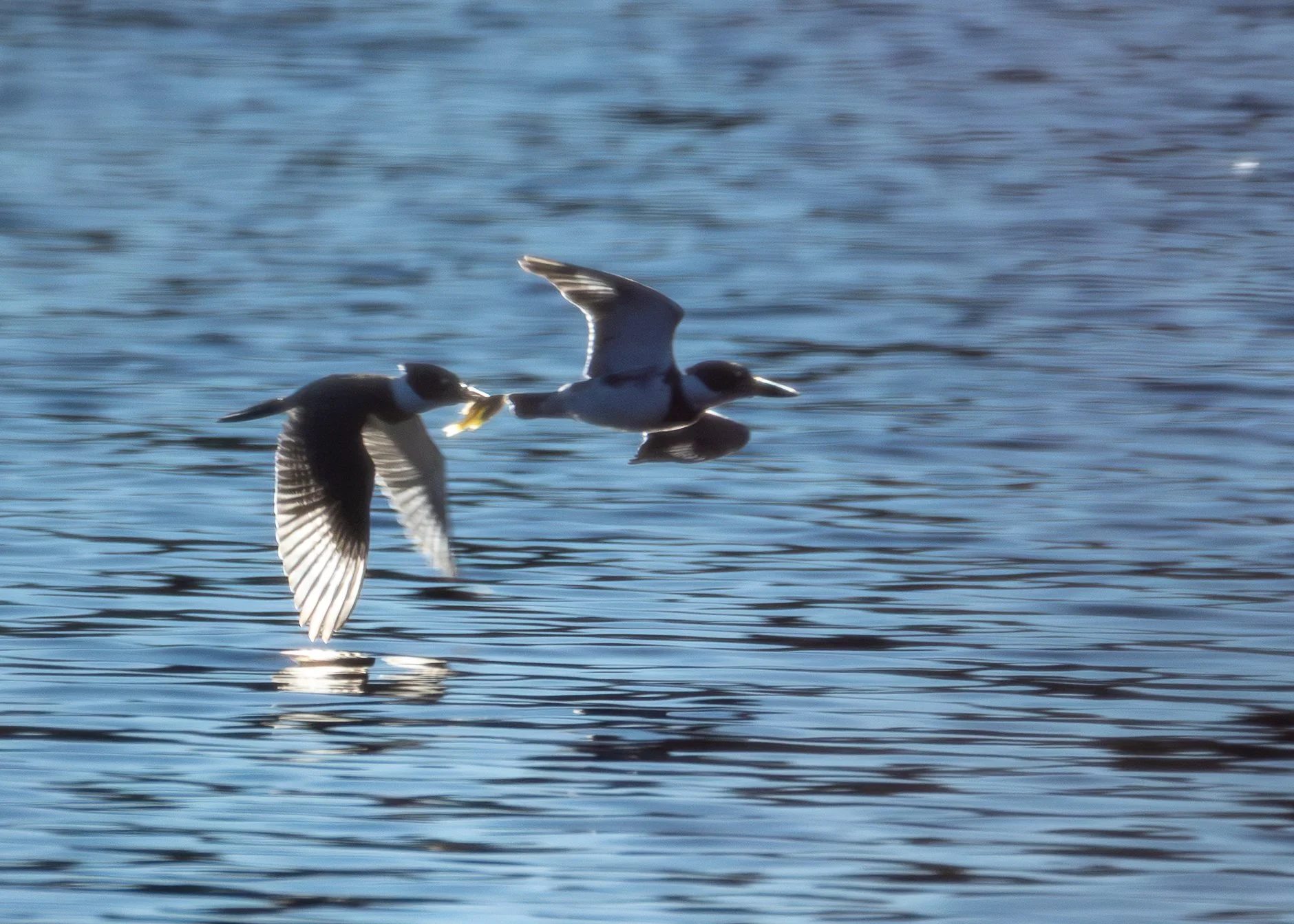
Belted Kingfishers
On this particular occasion, I had been hearing what I thought were two kingfishers calling to one another. Their distinctive rattling calls seemed to be coming from nearby, although it wasn't immediately clear where both birds were positioned. It was a pleasant surprise when I was able to capture them together in a single photograph, flying just above the water. It is one of those fortunate moments in bird photography when the sounds you have been hearing and the activity you have been trying to locate finally come together in one frame. Watching their combination of patience, precision, and athleticism never really gets old.
The Downy Woodpecker offers a different kind of entertainment. It is our smallest and most common woodpecker, and one of the easiest to overlook because of its regular presence. Its black-and-white plumage, compact size, and characteristic red marking on the male's head make it instantly recognizable. Downies are remarkably adaptable, moving along tree trunks and smaller branches in search of insects, often exploring places that larger woodpeckers cannot reach. They remain with us throughout the year, and during the colder months can often be found traveling with mixed flocks of chickadees and nuthatches. Their presence is a reminder of how much activity takes place in the trees, even when the woods appear quiet.
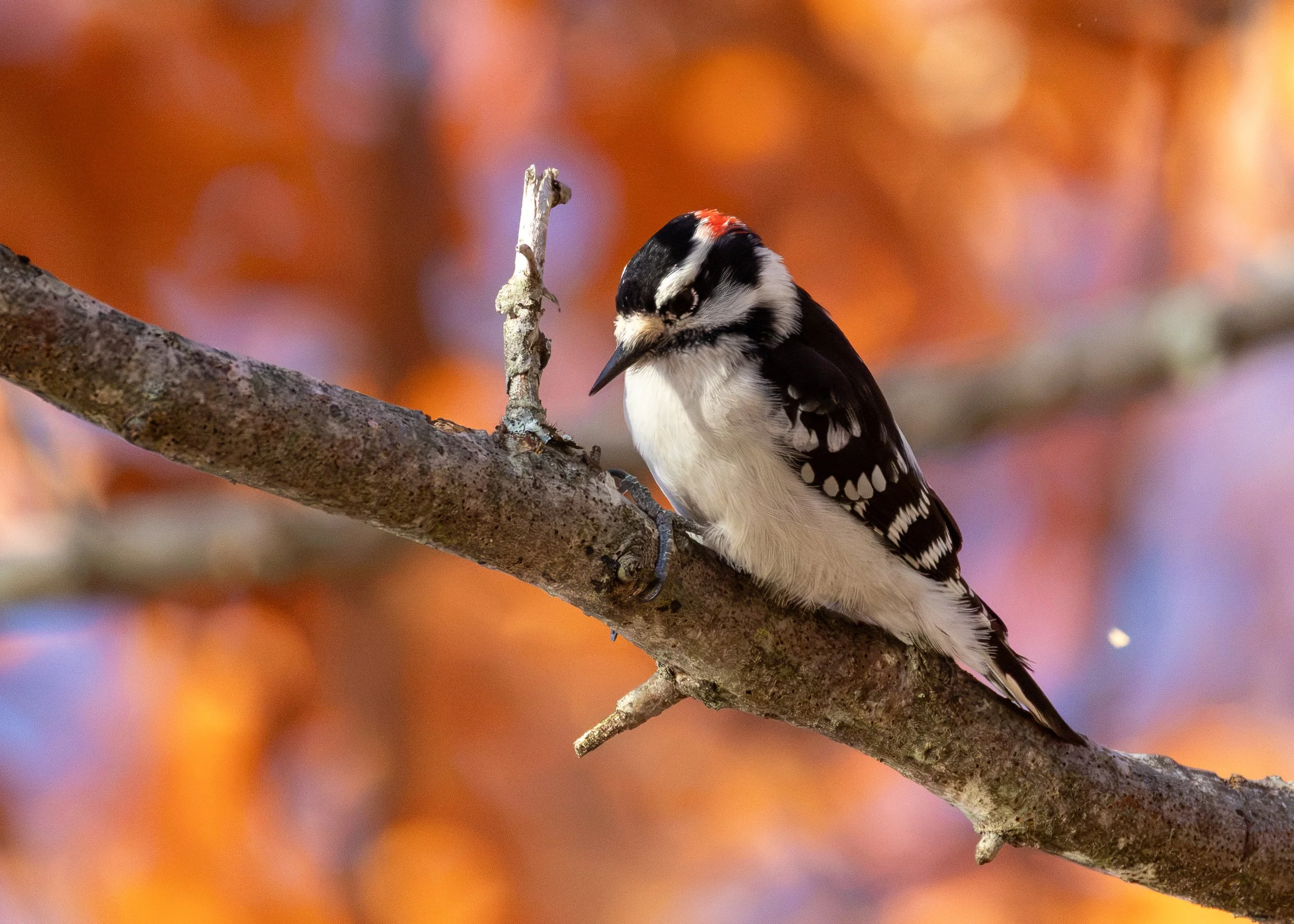
Downey Woodpecker
Then there is the Black-capped Chickadee, perhaps one of the most endearing birds in our New England woodlands. As Massachusetts' state bird, it is familiar to just about everyone, but familiarity should never diminish our appreciation of it. Chickadees are curious, energetic, and remarkably resourceful. They move almost constantly through the branches, often hanging upside down as they investigate leaves and twigs for insects. Their familiar chick-a-dee-dee-dee call is heard in every season, and their presence often helps us locate other birds. During winter, they frequently travel in mixed-species flocks, bringing together some of the smaller woodland residents in a cooperative search for food. There is something reassuring about hearing their familiar calls on a cold winter morning.
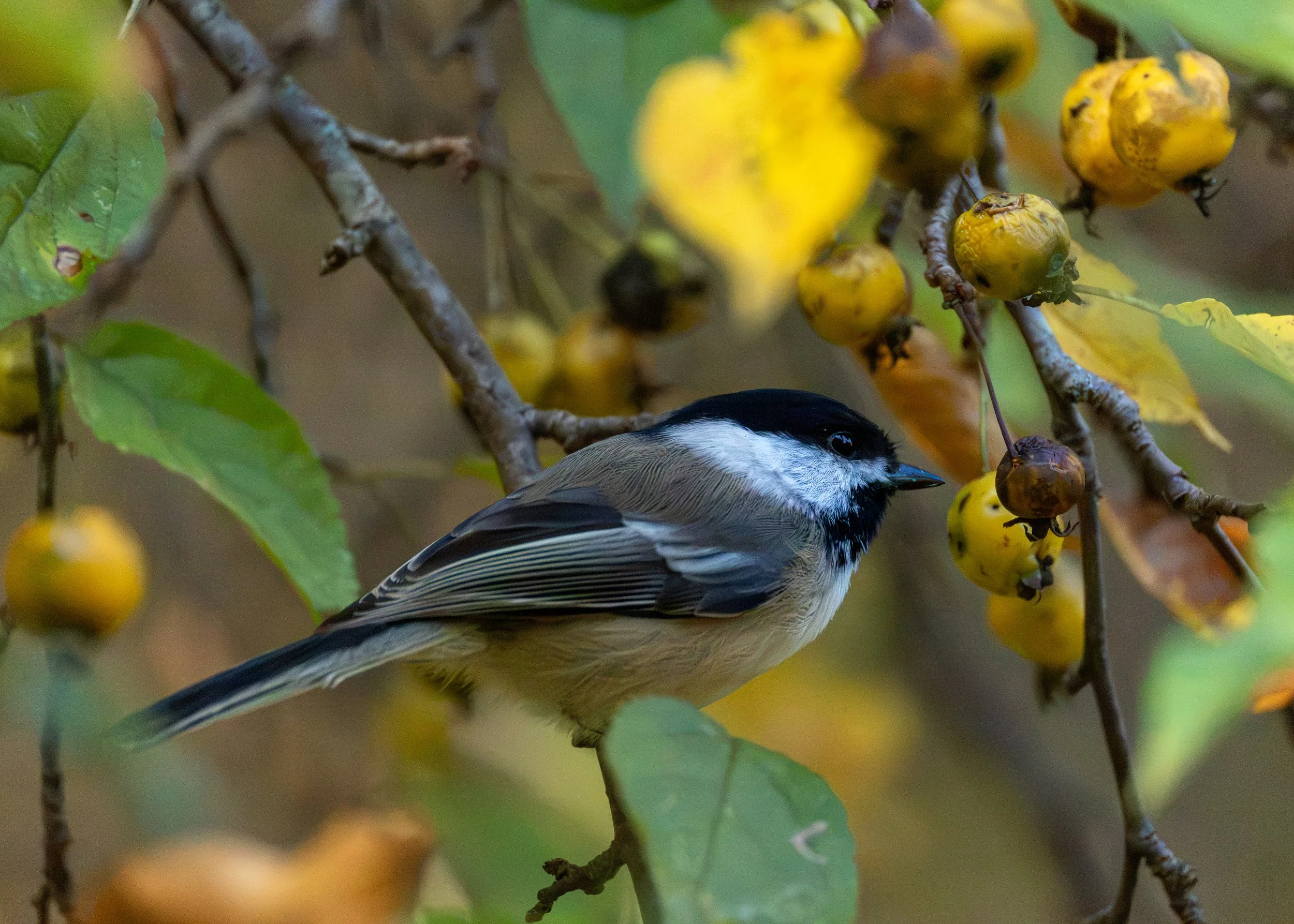
Black-capped Chickadee
And then there is the Mute Swan, which brings an entirely different presence to the water. Unlike the smaller, constantly moving woodland birds, the swan seems to possess an almost effortless elegance. Its long, gracefully curved neck, brilliant white plumage, and unhurried movements make it a striking sight against the reflections and changing colors of a pond. Although the Mute Swan is not native to North America, having been introduced from Europe, it has become a familiar part of many Massachusetts waterways. Its beauty is undeniable, even as its presence reminds us that not every familiar species is part of our original native wildlife community.
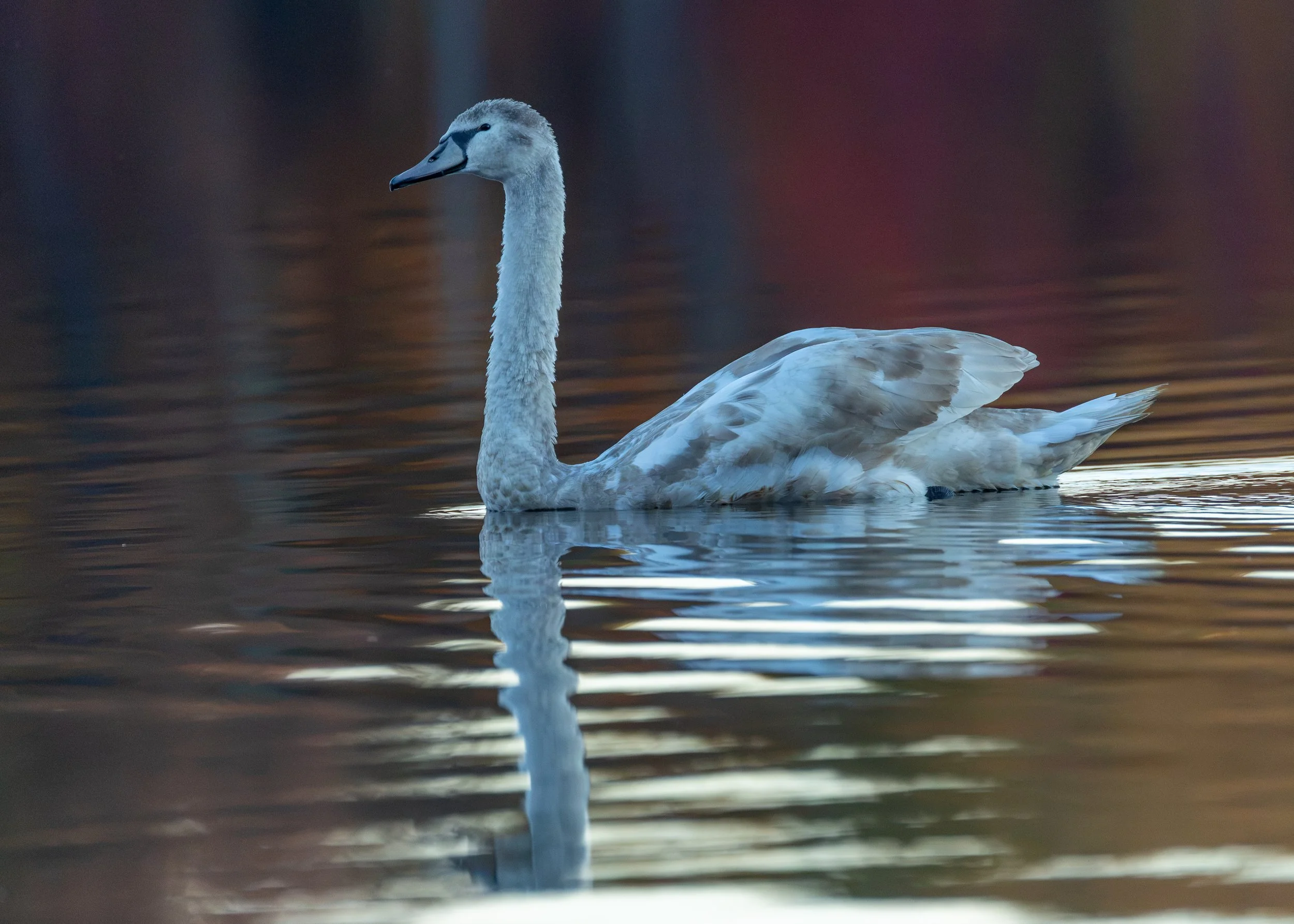
Mute Swan
What connects these birds is not necessarily their rarity or even their relationship to one another. It is the fact that each occupies a particular place in the landscape. The kingfisher depends on healthy waterways and an adequate supply of fish. The Downy Woodpecker relies on trees that provide insects, shelter, and nesting opportunities. The chickadee benefits from a diverse woodland environment with a mixture of trees and understory vegetation. And the swan has made our ponds and lakes part of its established habitat.
Together, they offer a glimpse of the variety of life that makes a place like Hale Reservation so enjoyable to explore.
There is also something to be said for the value of returning to the same places over and over again. The more familiar we become with a particular pond, woodland trail, or stretch of shoreline, the more we begin to notice. We recognize the kingfisher's rattling call, know where the Downy might be searching for insects, and anticipate the appearance of chickadees moving through the branches. These encounters become part of our own seasonal experience of the landscape.
Perhaps that is one of the greatest pleasures of spending time outdoors. We don't always need to discover something new or unusual to find something remarkable. Sometimes it is enough to pause, observe, and take a closer look at the birds that have been there all along.
The familiar is not necessarily ordinary. And the more closely we look, the more extraordinary it becomes.